
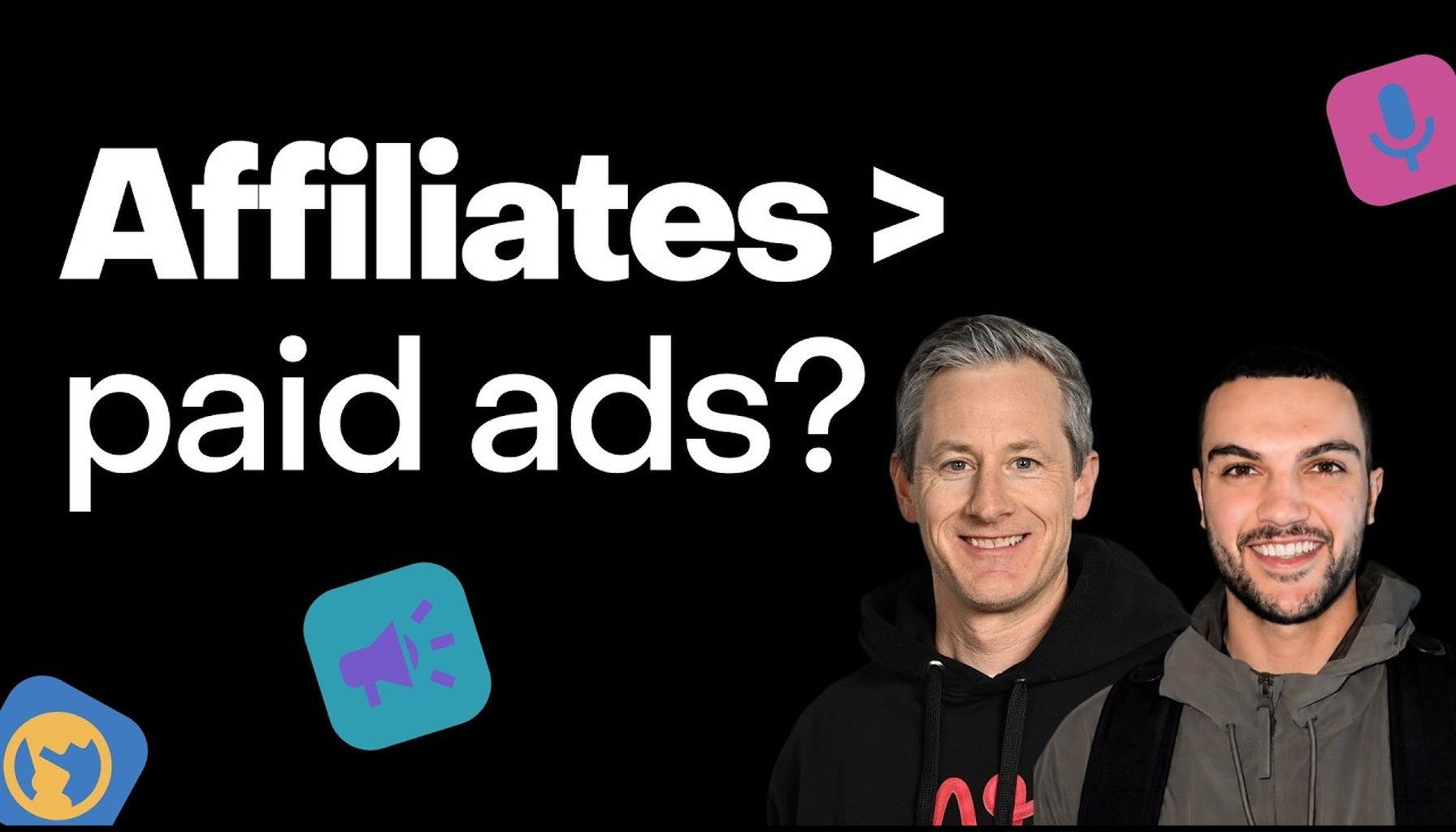
A note from Michael Butler, founder of Insert Affiliate.
Earlier this week I joined David Barnard for a live Sub Club by RevenueCat session, "How to use affiliate marketing to grow your app", alongside Mark Kennedy, founder of the couch-to-5K app None to Run. It runs about an hour and is packed with real numbers, so if you are thinking about starting an affiliate program for a subscription app it is worth the full watch. You can watch the full session on YouTube.
Here are the parts I think are most useful.
None to Run's real affiliate program
Mark walked through the exact program None to Run runs today:
- Commission: a flat 20% on the first three months of monthly plans, and on the first annual payment for yearly plans.
- Where the affiliates came from: past influencer relationships, an engaged Facebook community of runners, and increasingly B2B partnerships with local run clubs and races.
That last source is worth highlighting. Affiliates do not have to be social media creators. A run club that recommends your app to new members, with its own code, is an affiliate too, and often a very high converting one.
How affiliate attribution works in an app
Attribution needs two things attached to the purchase: the affiliate's short code and your company ID, passed as metadata when the transaction happens. Our SDK handles that for you.
There are two ways an affiliate's referral reaches the app:
- Links. The affiliate shares a deep link; when a user installs and opens the app through it, the SDK picks up the referral.
- Short codes. The user types a code inside the app. Simpler to share verbally, on a podcast, or on a printed flyer at a race, and it works regardless of how the user found the store listing.
I then gave a live look at the Insert Affiliate dashboard: affiliates, attributed transactions, commission owed, and payouts, all in one place.
How much should you pay an affiliate?
This was the longest segment and probably the most useful. My rules of thumb:
- A fair recurring rev share on subscriptions generally sits between 15% and 40%.
- Start about 5% higher than where you plan to land. It is much easier to launch generous and settle into a rate than to raise it later.
- Pay on sales, not installs.
David added a data point from his own experience: paying 100% of the first payment to an affiliate and still coming out ahead once spillover and retention were factored in. The first payment is only a fraction of the lifetime value of a subscriber, and affiliate content brings in people who never used the code at all.
The halo effect
That spillover has a name in the session: the halo effect. A creator's video or a run club's recommendation keeps working long after it is posted. People search for the app later, hear about it second hand, or convert on a second exposure. Attributed revenue is the floor, not the ceiling, so judging a program purely on tracked conversions will undervalue it.
Affiliate marketing and AEO
An interesting tangent around the 10 minute mark: None to Run has lost some SEO ground as more discovery moves to AI-generated answers. Mark's response is answer engine optimisation, and affiliate content plays straight into it. Every review, video, and mention from an affiliate is another source an AI answer can draw on when someone asks "what is a good couch to 5K app". Affiliates are building your presence in AI answers whether you planned for it or not.
Ramping up: custom trials and affiliate-branded paywalls
Mark and I also talked about ways to make an affiliate's referral feel special to the user. Giving an affiliate's audience a longer trial, or a paywall that acknowledges the code they used, lifts conversion because the user is getting something for following the recommendation rather than a generic offer.
Audience Q&A highlights
Two live questions worth pulling out:
- Can you combine an affiliate program with a user referral system? Yes, and they complement each other. Referrals are for existing customers recommending to friends; affiliates are partners with an audience. The attribution and payout mechanics are the same, so the same setup can run both.
- How do you handle contracts with affiliates? Keep a short written agreement covering commission, payment timing, and content usage rights, especially if you want to reuse their content in ads later.
Payouts
I closed the mechanics section with how paying affiliates works in Insert Affiliate: commissions accrue against attributed transactions, and when you are ready to pay, it is a one-click payout to the affiliate. No exporting spreadsheets, no manual reconciliation.
Thanks to David and the RevenueCat team for hosting, and to Mark for sharing real numbers. You can watch the full session on YouTube.